






When commercial garment decorators see a visible shiny rectangle, chalky halo, or yellowish scorch mark around the printed graphic on a direct-to-garment (DTG) cotton T-shirt, the defect comes from excess pre-treatment solids crystallising on the fabric surface or thermal oxidation during over-heated contact pressing.
Understanding which pre-treatment marks are temporary water-soluble press rings—and which are permanent scorch damage—allows DTG print shops to ship clean dark, mid-tone, and light cotton apparel without costly garment rejects.
Temporary Pre-Treatment Press Box vs. Permanent Thermal Scorching
Before adjusting spray nozzles or discarding a printed shirt, quality inspectors must distinguish between two very different visual marks that appear inside the pre-treated zone of a cotton garment:
- Normal water-soluble pre-treatment press box (temporary): Calcium-salt and polymer binder solutions used to anchor white DTG ink naturally flatten and reflect light differently after being pressed under a heat platen. On navy, black, or royal-blue 100% cotton tees, this faint shiny rectangle is water-soluble and disappears completely after the garment’s first domestic cold-water wash.
- White chalky crystallization halo (over-application): If a shirt displays a crusty white border or frosty salt tide-mark around the spray zone even before pressing, the spray nozzle delivered more liquid than the cotton yarn weight (GSM) could absorb.
- Brown or yellow thermal scorch mark (permanent fiber/chemical oxidation): When a heat press sits above the temperature threshold of the pre-treatment formula—or clamps down with excessive pressure on damp pre-treatment—the chemical binder and cotton cellulose caramelise into a permanent yellow-brown tint that will not wash out.
Troubleshooting Matrix for DTG Pre-Treatment Staining across Garment Shades
Because different dye chemistries and cotton weights react differently to heat and pre-treatment salts, operators should adjust dilution, spray weight, and drying temperature by garment colour tier.
| Observed Garment Symptom | Most Sensitive Garment Shades | Primary Technical Cause | Immediate Shop-Floor Fix |
|---|---|---|---|
| Yellowish rectangle on light or white fabric | Bleached white, natural ecru, pale pink, sky blue, and light heather | Heat-press temperature too high or dwell time too long during pre-treatment drying | Lower pre-dry heat-press temperature by 10–15 °C (or dry in a hot-air tunnel dryer) and dilute pre-treatment per manufacturer light-shirt ratio |
| Shiny stiff “frame” around chest graphic | Black, dark navy, burgundy, and forest green 100% cotton | Excessive pre-treatment gram weight + high mechanical clamping pressure on a contact heat press | Weigh blank before/after spraying on a digital gram scale; reduce nozzle pulse width and use medium press pressure with a parchment/PTFE sheet |
| Dye migration / purple or green colour shift inside spray box | Reactive-dyed red, royal blue, kelly green, and mustard cotton tees | Wet pre-treatment reacting with unstable fabric dye under trapped steam | Hover the heat press or use a conveyor dryer with active exhaust so moisture escapes without steaming the dye |
| Muddy white ink with rough fiber poke-through | Heavyweight carded cotton tees and fleece hoodies | Insufficient pre-treatment fluid or skipping the post-spray flattening press | Increase spray weight slightly to match higher GSM and press flat for 5–10 seconds after drying to lock down surface fuzz |
Four Step-by-Step Controls for Clean, Box-Free Cotton DTG Runs
Print shops that consistently deliver retail-ready DTG shirts without distracting chemical frames enforce four practical controls at the pre-treatment and curing stations.
First, crop the pre-treatment spray zone to match the actual artwork dimensions rather than spraying a full 35 × 40 cm chest square for a small 10 × 10 cm left-chest emblem. Modern automated pre-treatment machines allow operators to select zone width and length, keeping unprinted shirt areas completely untouched.
Second, verify whether white and pastel blanks require pre-treatment at all—and dilute appropriately when they do. As noted in industrial DTG practice, whether light garments need pre-treatment depends on the specific ink chemistry, fabric finish, and wash-fastness target; when a light shirt does require pre-treatment for white highlights or wash durability, diluting the solution with distilled water per manufacturer specs prevents yellowing.
Third, release steam during pre-treatment drying. If drying pre-treated shirts on a clamshell or drawer heat press instead of a tunnel dryer, open the press briefly mid-cycle (or use a breathable non-stick mesh cover) so evaporated water vapour escapes into the room exhaust rather than baking back into the cotton fibres.
Fourth, let cured shirts cool and re-absorb ambient room moisture before final visual inspection; cotton fibres temporarily darken under heat and return to their true shade once cooled.
Pairing Pre-Treatment Discipline With Industrial Commercial DTG Printers
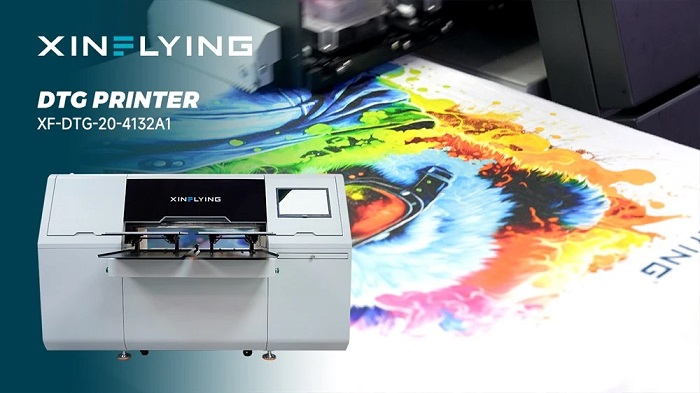
Once pre-treatment gram weight and pre-press smoothing are locked in, a high-precision commercial DTG printer can lay down a thinner, more uniform white underbase—further reducing both ink cost and surface stiffness. Production managers evaluating multi-head industrial platforms such as the XINFLYING XF-DTG-20 (including the XF-DTG-20-4I32A1 four-head dual-platen configuration) or compact systems like the XF-DTG-10 can review the full technical range of XINFLYING commercial DTG garment printers to match white-ink jetting precision and daily output to their shop floor.
Combining a calibrated industrial platform like the XINFLYING XF-DTG-20 with zoned pre-treatment spraying and steam-vented drying eliminates unsightly box marks and protects profit margins on every cotton apparel run.